


Address: No. 92, Xidazhi Street, Nangang District, Harbin


JOIN-USHIT sincerely invite talents from both home and aproad to join in the new course of constructing first-class universities. |
On November 14, Xinhua News Agency released a special report titled “The Spirit of the Fourth Plenary Session at the Grassroots Level--Harbin Institute of Technology’s ‘Small Satellite’ Class Employs a ‘New Teaching Model’,” covering HIT’s implementation of the spirit of the Fourth Plenary Session of the 20th Central Committee and its integrated efforts to advance education, science and technology, and talent development. The report showcases how the Small Satellite Class develops top innovative talent using this “new teaching model,” enabling students to grow through “authentic scientific research” and contributing to national strategic and industrial development.
Original Report
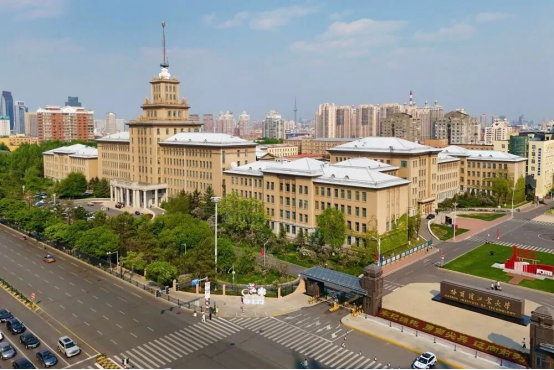
Aerial view of HIT
In early winter, research enthusiasm at Harbin Institute of Technology remains undiminished. Here, a new generation of students with aerospace dreams finds its own runway for takeoff—the HIT Small Satellite Class.
The Fourth Plenary Session of the 20th Central Committee laid out a blueprint for “integrating the development of education, science and technology, and talent,” emphasizing the need to “jointly cultivate talent aligned with technological innovation, industrial development, and national strategic needs,” and to “nurture top innovative talent.” This national strategy is being realized in this fertile soil for scientific innovation.
On a visit to the classroom of the Small Satellite Class, one would be inevitably attracted by its a distinctive “new teaching model” that have recently come to life: credit requirements are being “reduced,” while course content is being “enriched”; classes now take place in satellite workshops, and chief engineers have joined the teaching team; student evaluations no longer depend solely on exam scores but also on “whether the satellite can fly.”
Not long ago, Yao Zunhao, class monitor of the 2022 Small Satellite Class, and his classmates won the gold prize in the undergraduate creative category of the China International College Students’ Innovation Competition with their “Novel Cellular Satellite Project.” They independently developed new methods for satellite electromagnetic simulation and explored new architectures for mega-constellation operations. Their training program shows that the graduation requirement has been reduced from over 160 credits in the past to 146 credits.
Reducing credits is intended to create room for “adding” more research. “The new training plan removes repetitive content from previous courses, allowing us to devote more time to research and hands-on practice,” said Yao Zunhao.
Although class hours have been reduced, the “value” of the classroom has increased.
“Traditional courses are updated every four to six years, but our teaching content keeps pace with national strategies and technological advances,” said Wang Xiaogang, Vice Dean of HIT’s School of Aerospace. As a “special zone” for cultivating aerospace talent, the Small Satellite Class has broken conventions since its inception, integrating scientific research with education. Instructors translate their latest research outcomes directly into course content, ensuring the curriculum evolves rapidly.
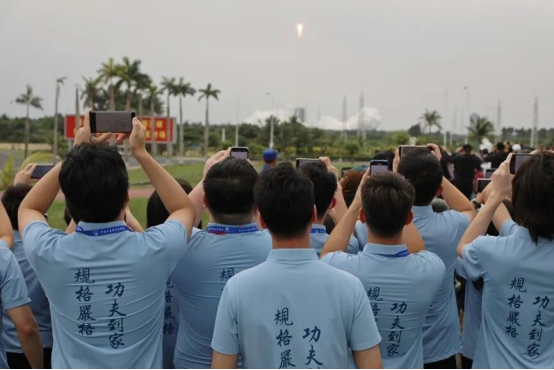
HIT students observing a satellite launch on site
“I was amazed that a single course, ‘Frontier Technologies in Aerospace Engineering,’ was taught by eight rotating instructors,” said Hu Yanghai, a student from the 2023 Small Satellite Class. From missile technologies to crewed spaceflight, and from satellite launches to intelligent guidance systems, “this lecture-based format—featuring both university professors and lead engineers from industry—gives us access to the forefront of aerospace from the moment we enroll,” he said.
In the Small Satellite Class, the most important “teaching tool” is not a model but an actual satellite destined for space. The HIT Lilac Student Micro-Nano Satellite Innovation Workshop brings together undergraduate, master’s, and doctoral students from multiple disciplines, pioneering student-led micro-nano satellite development in Chinese universities. The “Lilac-03” ultra-flat disk satellite, independently developed by students, is set to launch soon.
Li Ankang, a 2024 doctoral student in the School of Aerospace and a member of the first Small Satellite Class cohort, recalled that during the structural design of the “Lilac-03” satellite, a component was damaged. His first instinct was to “repair and reuse it.” But his advisor, Guo Jinsheng, was firm: “It must be replaced. Anything going to space cannot carry the slightest hidden risk.”
“Failure is tolerated, but defects are not,” said Li Ankang. This respect for quality is something no textbook can teach.
In the satellite workshop located in Harbin’s Songbei District, Wang Guanqi, a 2024 master’s student, still remembers the days and nights he spent developing the docking and capture mechanism for “Lilac-03.” “I worked on it for nearly a year, from model design to ground testing, iterating over and over. The sense of accomplishment when seeing the hardware I designed finally ‘go to space’ is incomparable,” he said.
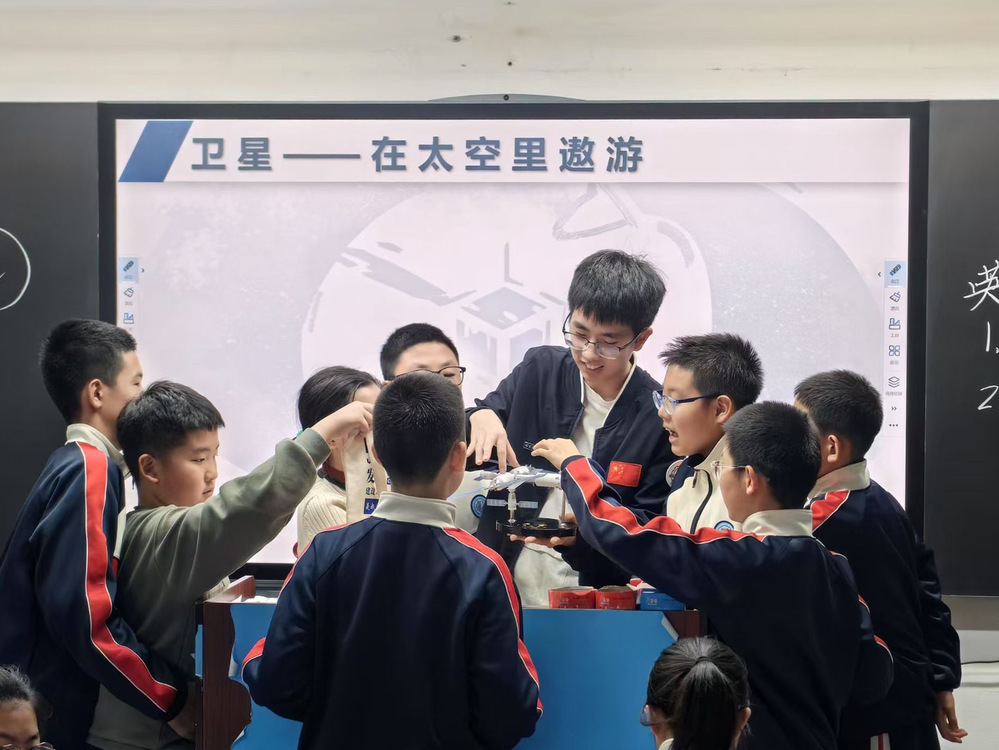
HIT Small Satellite Class students (center) conducting science outreach for primary and secondary school students
Today, such hands-on opportunities run throughout the entire undergraduate training process. Freshmen work on foundational projects like quadruped robots. Sophomores build drone control platforms. Juniors can join their advisors’ research projects, engaging directly with frontier technologies.
“The Fourth Plenary Session of the 20th Central Committee set out key tasks for ‘building a modern industrial system’ and ‘accelerating high-level scientific and technological self-reliance and self-strengthening.’ We will continue advancing teaching reforms, optimizing the ecosystem for cultivating innovative talent, bringing cutting-edge technological advances into the classroom, and enabling students to enhance their skills through practice—nurturing young people who dare to think, dare to act, and are capable of tackling tough challenges,” said Wu Fan, instructor at the HIT Lilac Student Micro-Nano Satellite Innovation Workshop.
“We are not just teaching students how to build satellites; we are helping them grow through ‘real scientific research,’ contributing to national strategic and industrial development,” said Shen Yi, Vice President of Harbin Institute of Technology. Today, profound change in the integrated development of education, science and technology, and talent is increasingly taking root. (Reporter Yang Siqi)
一审-宋子畅
二审-陈东萍
三审-董永康
Address: No. 92, Xidazhi Street, Nangang District, Harbin